



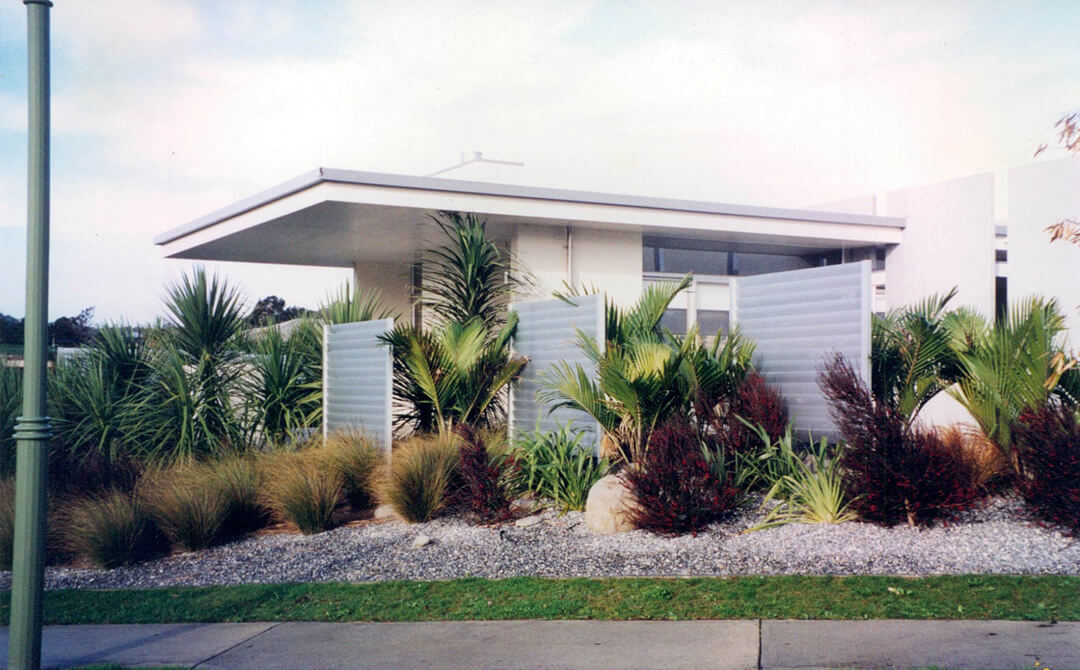
Garden Design done well
How the landscape design process works and what to expect.
If this is your first time working with a landscape designer, you don’t need to arrive with a full plan and a moodboard. But if you have one, great! What helps is something most people already have without realising it: a clear sense of what you like, and just as usefully, what you don’t.
That’s usually the real starting point. Unless it’s a new home, you know what’s working and what’s not in your outdoors. You’ve lived in the space; you know the parts that annoy you and the parts you’d protect at all costs; you’ve got opinions on colour and material from seeing hundreds of gardens in your life. If it’s a new home, you will have imagined the way you want to live in that new space. What sits between your instinct and a finished garden is technical knowledge, drainage, structure, how materials age, what a site will and won’t allow, and that’s the part we bring.
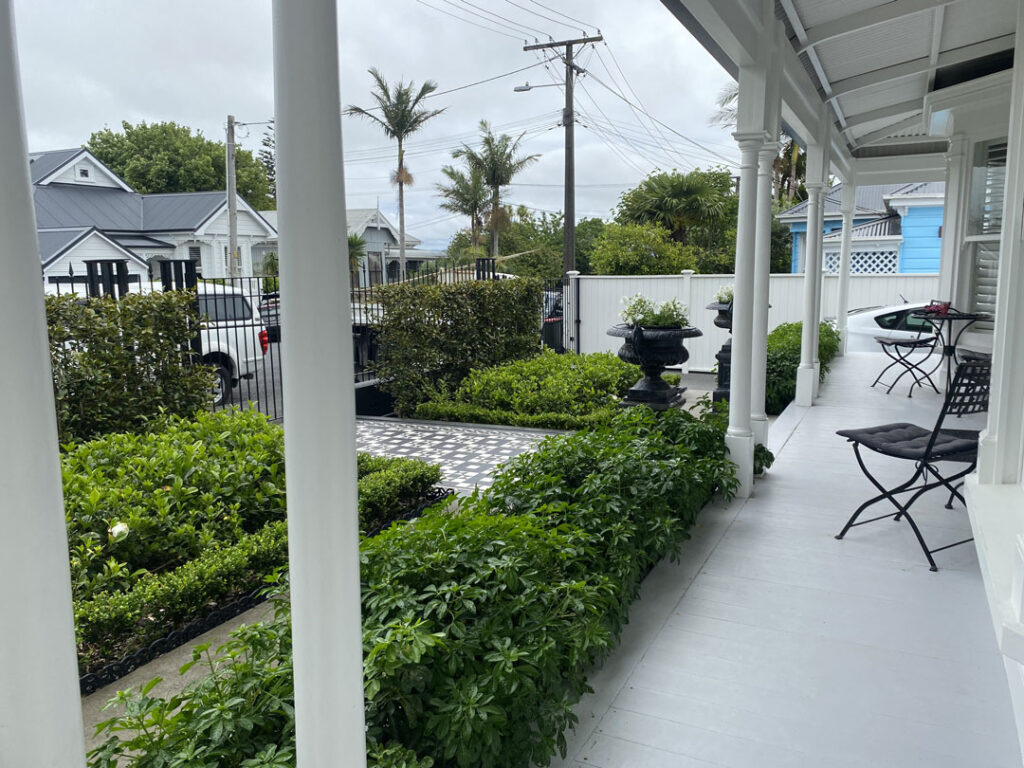
It’s also not just about the site. We want to know how you actually live, because a garden that suits a couple who host thirty people twice a summer looks different to one built for someone who wants a quiet corner, a dog, and a book in the afternoon. They’re different needs, and the answer changes depending on which one we’re meeting.
So we read two things early on: the site, and you – in the best possible way. On the site, that means where water goes when it rains hard, what’s shaded and when, what’s already growing that’s worth keeping, what the fall across the section actually does versus what the drawings assume. For you, it means understanding how the space needs to work day to day, socially or solitarily, loudly or quietly. Things you love about the garden or gardens in general and things you want to avoid.
Our process runs in five stages once that groundwork’s done.
- A pre-project meet-up, no obligation, just working out if we’re the right fit. We know how important it is to work with people you like and trust.
- Confirming the project once we agree we are. A little legal and scope sign-off
- Vision, where we visit the site again, capture more technical information and talk through what you want, need and wish for.
- Plan, where scope, price, concept drawings and finished drawings all get worked through.
- Implementation, where we project manage our part of it, start to finish.
And, of course, we can help maintain the garden to ensure it’s always in fine fettle, if you wish.
So, all you really need to start is to get in touch, and we can have that first conversation.


A garden for all 12 months
No more waiting for spring to step outside the backdoor.
We see it all the time: a soggy lawn in one corner, all winter, because nobody worked out where the water and sun goes. Timber seating or a path gone slick and green with lichen because that spot never gets a scrap of winter sun and never dries out. A whole side of a section nobody uses because it’s a wind tunnel from May to September, or an oven from December to March. This is bad design. And you deserve better. It’s a garden planned around geometry rather than around light, wind and the seasons, the outdoor equivalent of a house with no eaves and the wrong windows facing west, boiling in summer, freezing in winter, and somewhere you’d rather not be for half the year. What a waste!
It’s a waste of what might be the most expensive square metreage on your property.
It’s also not good for you, being shut off from your own outdoor space for months at a time, and it’s not good for the garden either. Grass that never dries out gets sick. Plants pushed into the wrong light struggle and get replaced, again and again, which is about as far from sustainable as garden design gets.

Auckland’s climate doesn’t actually deserve this. Winter highs sit around 14 to 15 degrees, a dry winter afternoon is a genuinely pleasant place to be (ask a visiting Wellingtonian!), and the raw material for a garden that works all year is already there. What’s usually missing is a plan that accounts for where the sun falls in July as carefully as it does in January, where shelter’s needed and where it isn’t, month by month, and how the hardscaping and planting work together to make the garden inviting every month.
We think life’s better outside, but outside has to be designed to work with you, not left to fight with the weather all year. That means planning around the sun you want and the protection you need in every month, not just the photogenic ones, and it means thinking about the garden as part of the same conversation as the house rather than an afterthought once the build’s finished. It’s why we love coming in early on a build or renovation, working alongside architects and landscape architects from the start, so the whole property, inside and out, gets designed as one connected space rather than two separate decisions made by different people at different times.
Done properly, you get to use every square inch of what you’ve got, and you stop finding yourself staring out the kitchen window in July, waiting for spring to hurry up.

Green-conditioning
With smarter planning, you can turn down the air con in summer and turn up the natural cooling effect of clever garden design and escape the heat into your own oasis.
Auckland’s urban heat problem will only ramp up without careful planning and planting. And every garden can contribute. A 2019 council report found that our urban centres can run four to five degrees hotter than the surrounding countryside, purely because concrete holds heat and green space is thin on the ground. Tree canopy cools two ways at once: it blocks direct sun, and it sweats, releasing water vapour that cools the surrounding air the way sweat cools skin. Auckland’s average canopy cover currently sits at around 18% against a council target of 30%, and that gap is a decent proxy for how much of this city is still under-shaded for the climate it’s heading into.
You might already have the mature trees doing this work for you, in which case the job is protecting and building around what’s there.
Sacha Reid
More often, especially on a newer property or a recent subdivision, that canopy doesn’t exist yet, and the equivalent effect has to be created some other way, through planting choices, hardscaping, and how the garden’s positioned against the sun. Green-conditioning isn’t just a tree strategy, what’s underfoot matters just as much. Dark, impermeable paving absorbs heat through the day and radiates it back out well into the evening, which is a large part of why a courtyard can still feel like an oven at nine at night. Unless you like an outdoor sauna! Permeable surfaces, gravel, certain pavers, gaps planted with groundcover, behave differently: they let water through rather than pooling it, and that moisture gives the surface something to cool itself with rather than just baking. Colour matters too. A pale, reflective paving choice sheds far more heat than a dark one, a genuinely simple lever that gets overlooked constantly because it’s a materials decision made early, often before anyone’s thinking about summer at all.

Orientation and airflow decide most of what happens next. A north-facing wall in this hemisphere takes the bulk of the day’s sun, and a west-facing one takes the worst of it, that low, harsh late-afternoon light that turns a courtyard into a frying pan right when you want to be sitting in it. Wind adds its own layer: Auckland’s airflow runs predominantly from the southwest, but summer and autumn bring the northeasterlies through more often, so a spot that’s beautifully sheltered in July can be uncomfortably still and muggy in February, or the reverse. Getting canopy, hedging and structure positioned against both, not just one, is the difference between a garden that has a good corner and a garden that works in every corner, all year round.
Plant choice is key. Species picked for how they actually cope with an Auckland February, rather than how they look on the day they’re planted, need less water, and can survive a dry spell without emergency irrigation, and keep contributing shade and cooling exactly when a garden needs it most. These are both aesthetic decisions and a bet on the next twenty summers, and it’s worth getting right the first time rather than replacing casualties every couple of years.
None of this stops at the fence line either. One kōwhai in a garden does a modest amount for a Tūī. A run of them through several neighbouring gardens does considerably more, which is essentially the same logic behind Auckland Council’s own push to connect green spaces into proper corridors rather than leaving them scattered. A garden designed with the wider neighbourhood in mind ends up doing more work: cooler in summer, more resilient in a dry spell, genuinely useful to the birds and insects passing through, bringing more life and joy to your patch of beauty.
This is part of how we approach the brief: Canopy, hardscaping, orientation, wind, plant selection and the wider neighbourhood all get weighed together from the start, because a garden that only looks right in the photo taken the week after planting isn’t actually finished. Green-conditioning is our name for designing for the many summers after.